
An
What is an emergency fund and how much do you need?
An emergency fund is a pile of cash you do not spend on daily life. It is not for vacations, new shoes, or weekend trips. It exists for moments when life goes wrong and you need cash right away. If your car starter dies on a Tuesday morning, this money pays for the tow truck so you do not have to use a high-interest credit card.
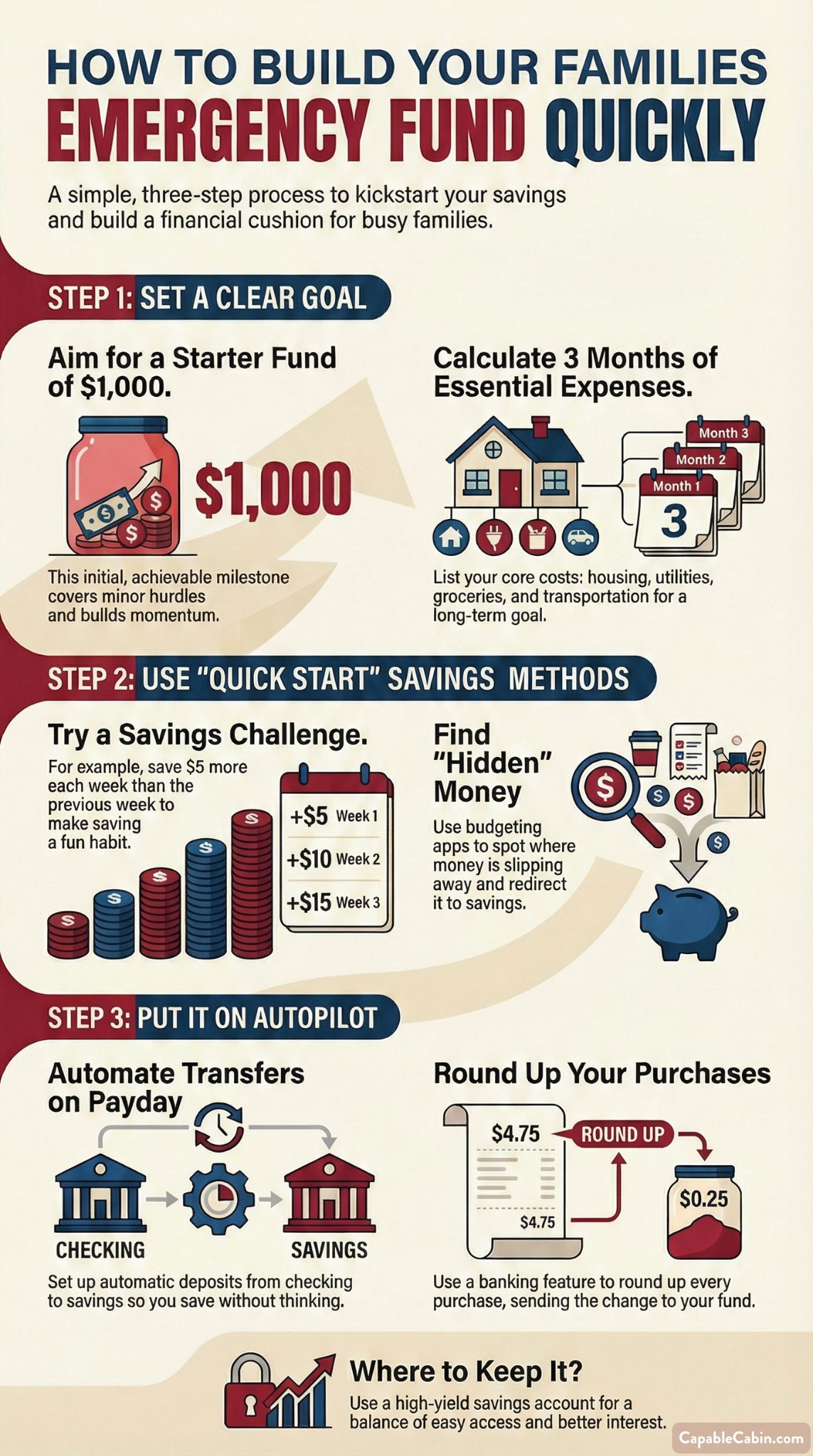
Most experts say you should aim for three to six months of living expenses, but that big target frightens people. If your rent, food, and bills cost 2,500 dollars a month, a full fund is 7,500 dollars. Do not start with that big number. Start with a tiny target of 1,000 dollars, which stops most everyday money disasters in their tracks.
Where to keep your savings so you do not spend it
Keep this cash in a high-yield savings account at a separate bank from your daily checking account. If you keep your emergency cash in the same place you swipe your debit card for lunch, you will spend it. Separating your money puts a healthy barrier between your feelings and your savings.
Here is what to look for when you open this account:
- No monthly account fees that eat your money.
- No minimum balance rules.
- Fast transfers back to your main bank within one business day.
- An interest rate above 4 percent per year.
How to build your cash buffer on a normal salary
You do not need a huge pay raise to save your first 1,000 dollars. You just need to automate the process so you do not think about it. Set up an automatic transfer on payday for 50 dollars from your checking account to your emergency bank. If the money leaves your main account the day you get paid, you learn to live on the rest without pain.
A simple story shows how this works in real life. Mark works as a store clerk in Ohio making 3,200 dollars a month after taxes. He set up an automatic 60-dollar transfer every Friday. He barely noticed the missing cash, but after four months, he had over 1,000 dollars sitting in his account for the first time in his life.
How to handle unexpected bills without going into debt
When a bad break happens, use your money without feeling guilty. That is why you saved it. If your phone breaks and you need it for work, pull 200 dollars out of your cash buffer. You avoided taking on credit card debt, which means you won this round against bad luck.
Once the crisis passes, your main goal changes back to building the buffer. Pause your other extra spending for a month or two. Put that 50 dollars a week back into the account until your total hits your goal again. Managing your
How do you know when to use your fund?
Before you spend a single dollar from your safety net, ask yourself three simple questions. Is this unexpected? Is it absolutely necessary? Is it urgent? If the answer to all three is yes, open the account and pay the bill.
A sale on winter coats is not an emergency. A planned annual car insurance bill is not an emergency either because you knew it was coming. A toothache on a Sunday morning is a real emergency. Learn the difference, protect your cash, and set up your first 50-dollar automatic transfer today.


0 Comments